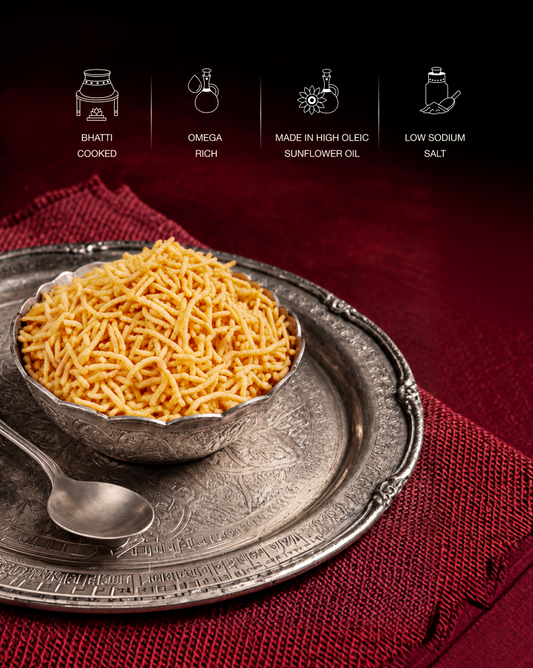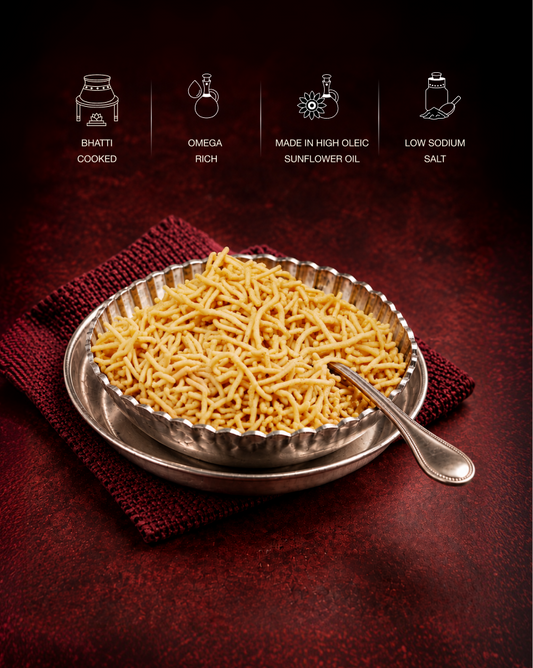
Low Sodium, Bhatti Cooked, Omega Rich, Naturally Light, Perfect Crisp
Skip to product information
1 of 5

Paraat Bhujia

Paraat Bhujia

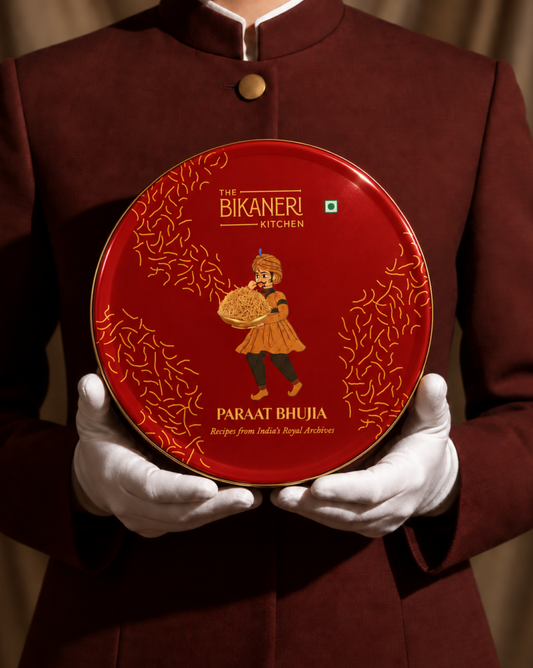
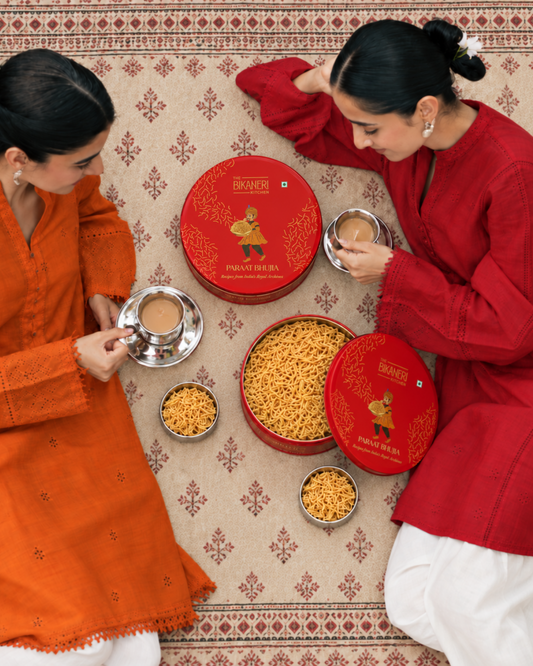
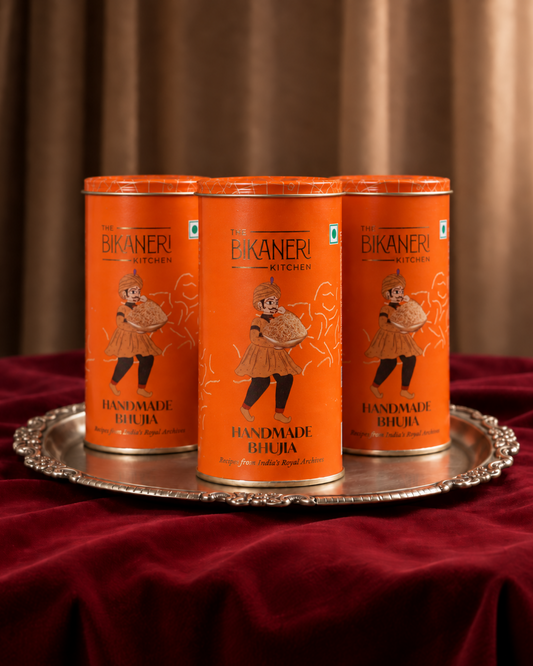
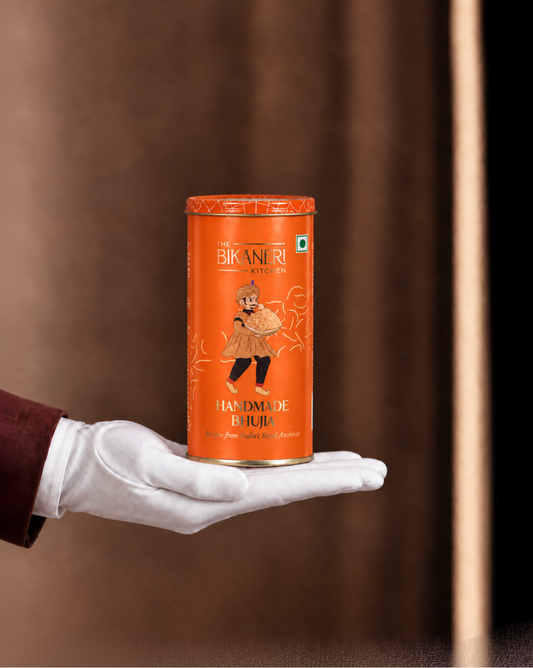
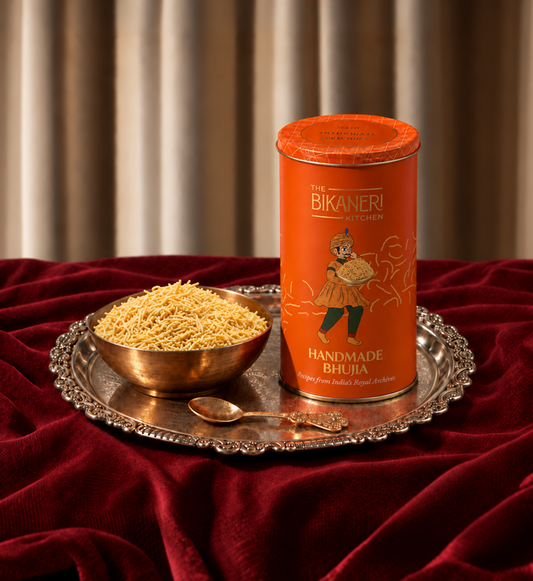
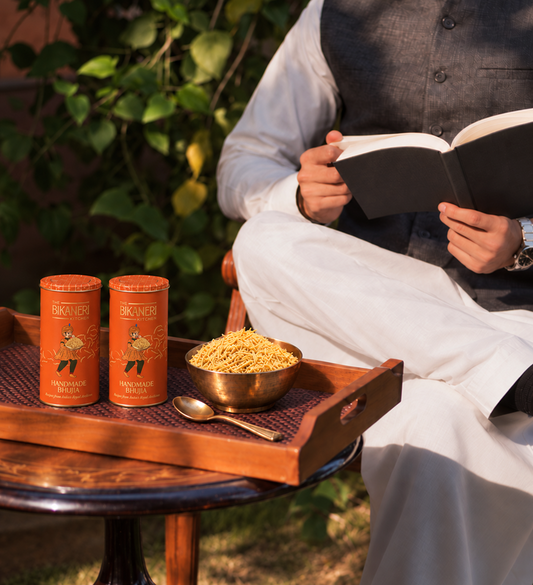
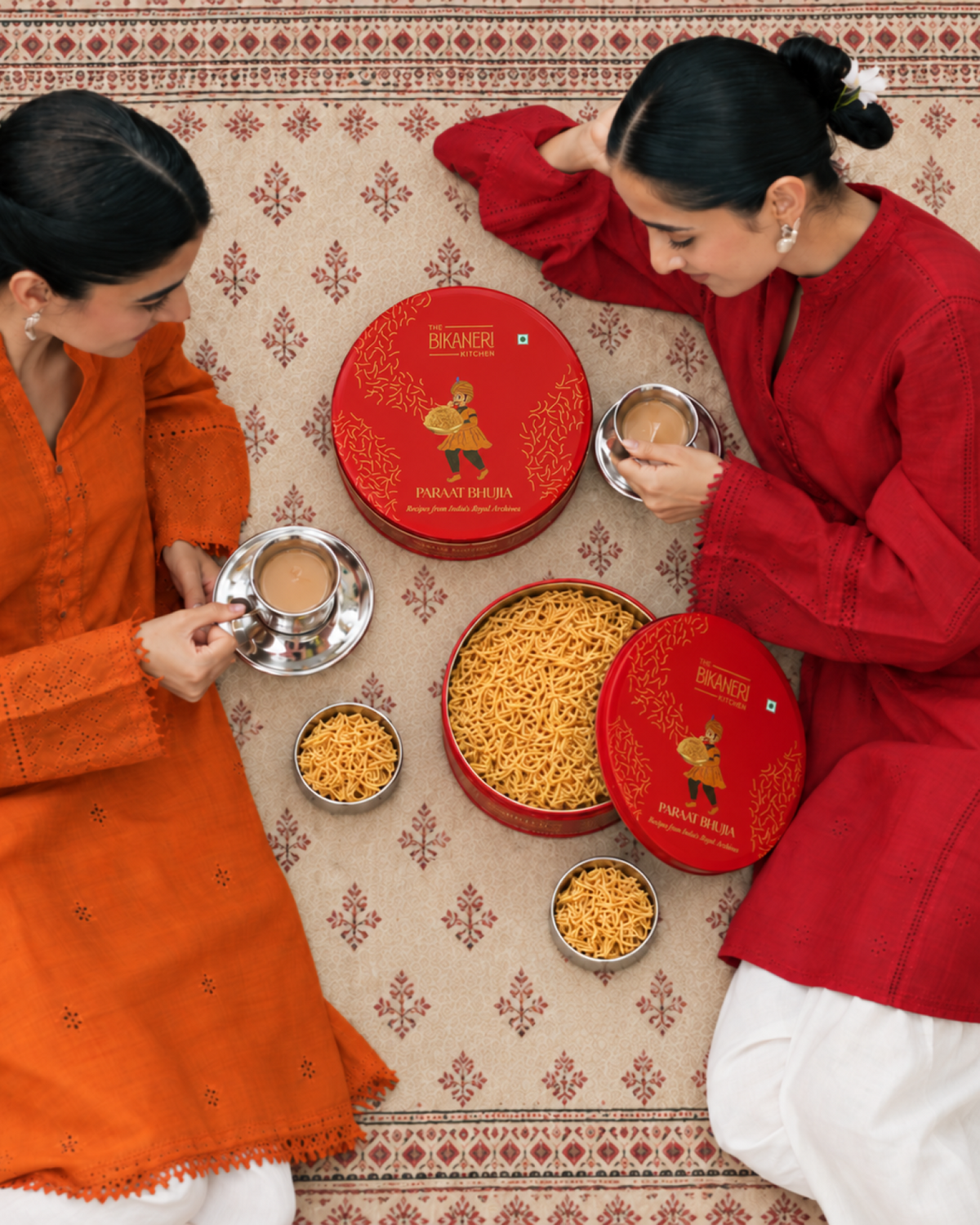
Paraat Bhujia traces its story to the royal kitchens of Maharaja Dungar Singh Ji, where moth, gram flour and spices came together in a recipe remembered for its lightness of bite and savoury depth. The paraat, the bhatti and the careful judgement of the hand each held their place in its making.

Our Paraat Bhujia stays close to that inheritance. Made with 45% moth flour, a considered blend of spices, high oleic sunflower oil and low-sodium salt, it carries forward a taste shaped by the land of Bikaner and the generations of hands that made it their own. 

Size
Quantity

10 Verified Reviews

1 10

  • “I grew up eating bhujia in Rajasthan, so there is a certain taste you instinctively look for. This has that familiar moth flavour, but what stayed with me was how light and balanced it felt. It reminded me of home without trying too hard.”

    Radhika Daga, Jaipur

Free shipping above 1299 Secure payments COD available
View full details

Prepared with a discipline that remains unchanged.

Made in high oleic sunflower oil

High oleic sunflower oil is used for its clean flavour and stability, helping retain the distinct taste of bhujia.

No re-use of oil, for purity of taste

Fresh oil is used for every batch, keeping the flavour clean and balanced.

Slow-cooked in traditional Bhatti

Each batch is slow-cooked in a traditional bhatti, allowing the heat to be carefully controlled throughout.

Made with low sodium salt

Low sodium salt keeps the seasoning measured, allowing the flavour of the ingredients to remain clear.

Prepared by skilled hands in batches

Each batch is prepared by experienced hands, carrying forward a craft passed down through generations.

Aao Sune Kahani Bikaneri Bhujia Ki

कहते हैं, कुछ स्वाद किसी रसोई में नहीं,
किसी ज़मीन में जन्म लेते हैं।

करीब डेढ़ सौ साल पहले,
थार के बीच बसे बीकानेर में,
एक ऐसा ही स्वाद जन्म लेने वाला था।

साल था 1877।

बीकानेर के महाराजा डूंगर सिंह जी ने
अपने शाही रसोइयों के सामने एक इच्छा रखी।

कुछ ऐसा बनाया जाए
जो पहले कभी न बना हो।

जो इसी धरती से जन्म ले,
और अपने भीतर बीकानेर को समेटे।

रसोई में बहुत कुछ था।

लेकिन एक बुज़ुर्ग रसोइदारनी की नज़र
एक छोटे से दाने पर जाकर रुकी।

मोठ।

थार की गर्म, सूखी मिट्टी में पनपने वाला दाना।

उसने मोठ के साथ बेसन लिया।
फिर काली मिर्च, लाल मिर्च, इलायची और लौंग।

सामान साधारण था।
हाथ अनुभवी।

आटा गूँधा गया।
बारीक जाली से दबाकर गर्म तेल में उतारा गया।

और निकले
महीन, सुनहरे लच्छे।

कहते हैं, उस नए स्वाद को
उस दिन एक नाम मिला।

भुजिया।

पर शायद उसकी असली कहानी
उसके बाद शुरू हुई।

राजमहल की रसोई से
वह हुनर बीकानेर की गलियों तक पहुँचा।

एक हाथ से दूसरे हाथ।
एक पीढ़ी से अगली पीढ़ी।

वक़्त बदलता गया।
बनाने वाले हाथ बदलते गए।

लेकिन मोठ रहा।
मसाले रहे।
भट्टी रही।

और हाथ का वह हुनर भी।

धीरे-धीरे भुजिया
सिर्फ़ बीकानेर में बनने वाला स्वाद नहीं रही।

भुजिया में ही बीकानेर बस गया।

और शायद इसीलिए,
आज भी जब बीकानेरी भुजिया की एक मुट्ठी हाथ में आती है,
तो उसमें सिर्फ़ स्वाद नहीं मिलता।

उसमें मिलती है एक धरती।
एक हुनर।
और कई पीढ़ियों की याद।

एक महाराजा की सोच से जन्मी।
एक रसोइदारनी के हाथों से बनी।
और थार की मिट्टी में पली।

ये कहानी है बीकानेरी भुजिया की।

Come, come, come! Today, I am going to tell you a story that perhaps even your grandparents have never heard. It is a story of salt and spice, and of a Maharaja’s grand feast. This is the story of Bhujia!

Our story begins nearly a century and a half ago. In the middle of a sea of sand stood Bikaner. Walls of red sandstone, palaces reaching towards the sky, and the vast Thar stretching in every direction. At the time, the throne of Bikaner was held by Maharaja Shri Dungar Singhji. The year was 1877.

A grand feast was being prepared at the palace. Guests were expected from far and wide. The Maharaja summoned the finest cooks of his royal kitchen and commanded, “Make something that has never been made before. Something born of this very land. Something that carries the spirit of Bikaner within it.”

The cooks were left wondering. What could they possibly make?

Among them stood an elderly cook, quietly observing. Silver in her hair. Years of skill written into her hands. She said nothing. She simply smiled and walked towards the pantry.

There she found moth beans, small desert beans that flourished in the scorching soil of the Thar. She took some gram flour. Then black pepper, red chilli, cardamom and clove. She looked at everything before her and said, “This is all I need.”

And then, the kitchen came alive. The dough was kneaded. It was pressed through a fine sieve straight into bubbling hot oil. Out came fine, golden strands.

The aroma was such that even the guards outside the kitchen began to wonder, “What in the world are they making in there?”

A platter was carried before the Maharaja. Every eye turned towards it. The Maharaja picked up a strand. Then another. Then another handful. Before long, even the guests were reaching for more.

The Maharaja asked, “What is this?”

The elderly cook bowed her head and replied, “It does not have a name yet, Your Highness.”

The Maharaja smiled. And, as the story goes, that day this new taste found its name, Bhujia.

But wait, the story is not over yet.

Years passed. The art of making Bhujia travelled from one pair of hands to another. From the royal kitchens into the lanes of Bikaner. From the lanes to its shops. And from the shops into homes.

Generations changed. The hands that made it changed. But the moth beans, the spices, the fire, and the age-old skill of making it continued to be passed on.

And slowly, Bhujia was no longer simply a taste made in Bikaner. Bikaner itself came to live within Bhujia.

So the next time you pick up a handful of Bikaneri Bhujia, remember. Born from a Maharaja’s idea. Brought to life by an elderly cook’s hands. And nurtured by the soil of the Thar.

This is the story of our Bikaneri Bhujia.

FAQ

Why is Paraat bhujia different?

Paraat Bhujia traces back to the royal kitchen of Maharaja Dungar Singh Ji, known for its long strands, light bite and savoury depth. The Bikaneri Kitchen follows the original recipe, made in the traditional paraat, with the same flame and careful hand. Nothing has been reinvented or adapted. The recipe remains just as it was first perfected.

What Ingredients are used?

Dew Bean Flour (Moth Flour) (45%), Edible High Oleic Sunflower Oil, Gram Flour (9%), and Ground Spices & Condiments (low sodium iodised salt, red chilli, ginger, black pepper, cardamom, clove, nutmeg).

How Is the texture different from Regular Bhujia?

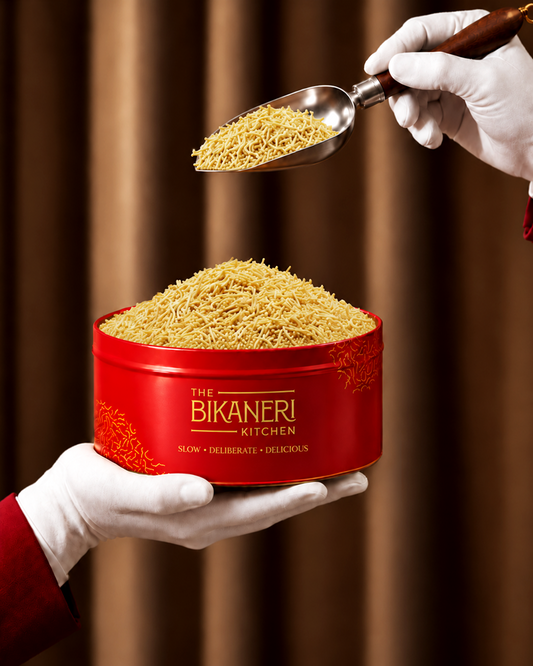
Paraat Bhujia stands apart with its long, delicate strands that give you a light, crisp bite in every mouthful. Hand-pressed and slow-cooked over a traditional bhatti, it achieves a satisfying crunch without any heaviness. Texture and timing, perfected the first time. It’s the kind of crispness you rarely find in regular, mass-produced bhujia.

How should it be stored?

Store in a cool, dry place, away from direct sunlight, heat, and humidity.

What is the shelf life?

Paraat Bhujia have a shelf life of 180 days from the date of packing.